Landscape Conservation
21 animals that recently went extinct
21 animals that recently went extinct
March 9, 2026
It’s tempting to think of extinction as something that only happened to animals in the past—woolly mammoths, saber-toothed tigers, and the dinosaurs. But extinction is an ongoing threat to animal species in 2026. Scientists suggest that we’re currently experiencing the sixth mass extinction in our planet’s history—and it’s largely the result of human activity.
According to the International Union for the Conservation of Nature (IUCN) Red List, more than 48,600 species are currently threatened with extinction, representing about a third of all species assessed by the list.
The number of species at risk for extinction shows that we need to conserve and protect endangered animals and, where possible, help regenerate populations. The situation will only worsen with the exacerbation of climate change.
Let’s look at 21 recently extinct animals, many of which you may never have heard of or seen. But first, let’s explore the bigger picture—the rate and primary causes of extinction in wildlife around the world.
The situation in 2026: extinction is accelerating
Unfortunately, the latest research on extinct animals isn’t good news. In 2026, the rate of extinction seems to be accelerating. Research suggests that current extinction rates are 1,000 or more times faster than they were in pre-human times.
Extinction is a natural phenomenon—species die out as part of evolution. When this happens, other species in the genus take the extinct animal’s place within the ecosystem.
However, extinctions are now occurring so quickly that ecosystems are struggling to recover. This causes a domino effect, with one extinction prompting another.
Some scientists are calling this acceleration the sixth mass extinction. Following mass extinctions that occurred millions of years ago—like the extinction of the dinosaurs—it seems that human actions are now causing extinctions at a much faster rate than they would naturally occur.
Top causes of extinction of wildlife species in 2026
When we look at the animals that went extinct in 2025 (and in other recent years), there are a couple of key causes to blame. These are:
- Habitat loss: Human activity is contributing to habitat loss and habitat fragmentation. Land that was once home to wild animals is being used for housing, industry, agriculture, and infrastructure.
- Invasive species: Invasive species enter a habitat where they prey on endangered species or compete with them for resources.
- Lack of genetic variation: When there isn’t much genetic variation within a species, that species is more likely to die from disease. Overhunting and overfishing reduce animal populations, which shrinks the genetic pool.
- Climate change: Many species are struggling to adapt to a warming climate. Rising sea levels, a reduction in rainfall, and rising temperatures are making it more difficult for species to survive within their habitats.
These are the primary issues we need to address to protect more animals from extinction.
21 recently extinct animals
Here are 21 of the most recently extinct animals from around the world.
ʻŌʻū
Scientific name: Psittirostra psittacea
Date of extinction: 2024
The ʻōʻū was a bird native to Hawaii. It was about 17 centimeters (6.7 inches) long, and it had dark green plumage aside from its yellow head—though females were green all over. It had a hooked, parrot-like beak, uniquely adapted for eating fruit.
Declared extinct in 2024, the ʻōʻū had not been recorded with certainty since 1989. Originally widespread throughout Hawaii, its population faced extreme decline due to hurricanes and lava flows; human activities like logging, agriculture; the introduction of feral animals like pigs, rats, and cats to its habitat; and diseases like avian malaria and avian pox, which spread from mosquitoes introduced to the islands.
Golden toad
Scientific name: Incilius periglenes
Date of extinction: 2019
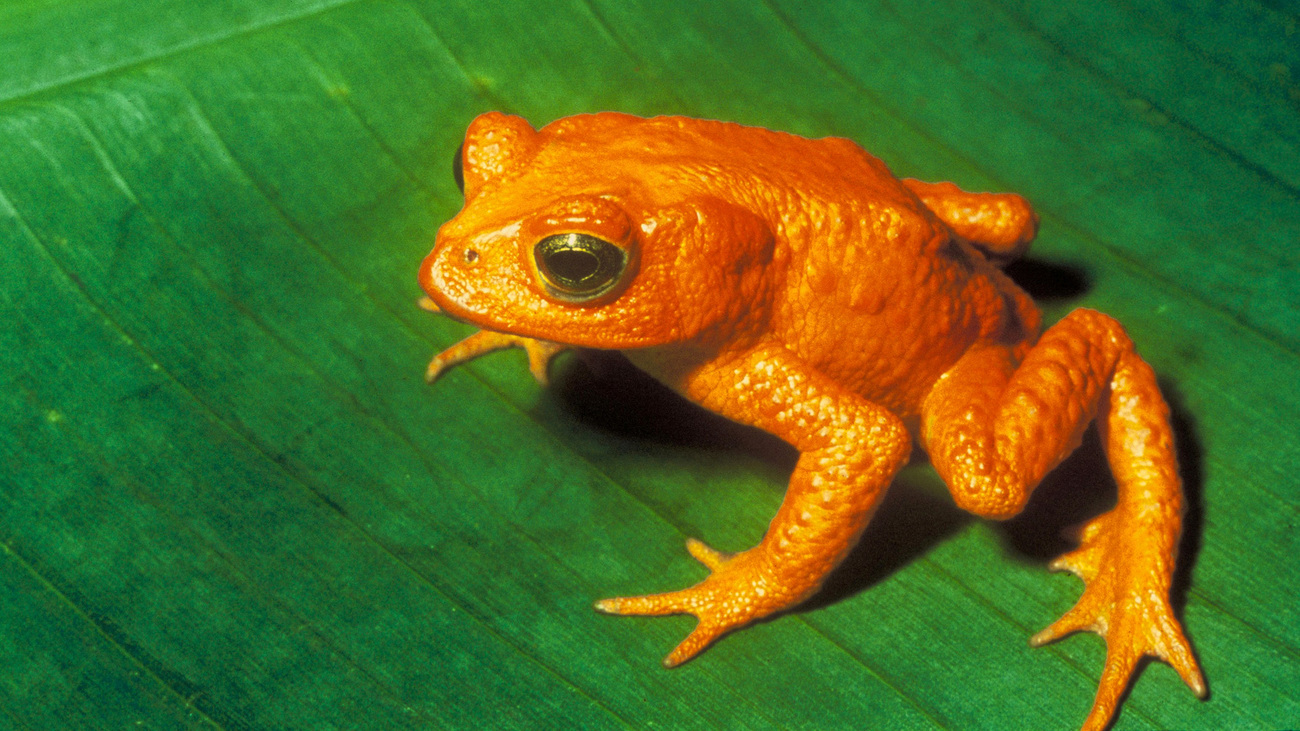
A golden toad. Photo: © US Fish and Wildlife Service
One of countless victims of human-induced climate change, the golden toad derives its name from its striking color. It was native to Costa Rica before its extinction.
The reproductive cycle of the golden toad was intrinsically tied to the amount of rainfall in its environment, with its larvae laid underground in the forest floors. Changes in weather patterns meant that heavy rain often stranded the larvae on the ground, while at other times, there wasn’t enough rain to keep the toads hydrated. These changes left the toads unable to reproduce, leading to their extinction.
Pinta giant tortoise
Scientific name: Chelonoidis abingdonii
Date of extinction: 2015
Also known as the Pinta Island tortoise, this species was assessed and declared extinct in 2015. This species has the distinction of being one of the more publicized extinctions in recent times.
The last remaining Pinta giant tortoise, dubbed Lonesome George, became something of a conservation icon for being the last member of his species. George was transported to a conservation center in 1972 and was under human care for 40 years. Attempts were made to facilitate breeding between George and female tortoises of other species, but none of their eggs were viable.
George died in 2012, and the Pinta Island tortoise species went extinct with him. His death, which was covered extensively in the media, gave us all a stark reminder of the danger many animal species face. The following words were inscribed outside George’s enclosure:
‘Whatever happens to this single animal, let him always remind us that the fate of all living things on Earth is in human hands.’
Mountain mist frog
Scientific Name: Litoria nyakalensis
Date of Extinction: 2021
Previously endemic to Australia, the mountain mist frog lived in forests and wetlands at higher elevations. Officially declared extinct in 2021, researchers found that the mountain mist frog perished due to the effects of the chytrid fungus Batrachochytrium dendrobatidis (Bd).
This fungus has spread throughout the world through human activity and devastates amphibian populations by infecting and damaging their skin. It’s estimated that Bd has played a major role in the decline of 501 amphibian species, making it responsible for more damage to global biodiversity than any other pathogen.
Sharp-snouted day frog
Scientific name: Taudactylus acutirostris
Date of extinction: 2021
The sharp-snouted day frog is one of the most recently extinct animals on our list. Although the exact cause of this species’ extinction is not verified, the IUCN lists its threats as mining, logging, and invasive species. Given that the sharp-snouted day frog shared a similar habitat to the mountain mist frog in Australia, there’s a good chance that the Bd fungus played a role in this animal’s extinction.
Chinese paddlefish
Scientific name: Psephurus gladius
Date of extinction: 2019
Found in China’s Yangtze River, the Chinese paddlefish was one of the largest freshwater fish on Earth before its extinction. It was officially declared extinct by the IUCN in 2019. It perished due to a combination of overfishing and dam construction in the Yangtze.
Pass stubfoot toad
Scientific name: Atelopus senex
Date of extinction: 2019
Another amphibian formerly found in Panama and Costa Rica, this toad made its home in high-altitude forests and wetlands of these two countries. The pet trade likely played a role in this toad’s extinction—its impressive coloring made it a prime target for trappers and poachers. This, coupled with the Bd fungus, likely led to the pass stubfoot toad’s extinction.
Chiriqui harlequin frog
Scientific name: Atelopus chiriquiensis
Date of extinction: 2019
Yet another victim of the Bd fungus, the Chiriqui harlequin frog was formerly found in Panama and Costa Rica. Although the frog wasn’t labelled extinct until 2019, it hadn’t been seen since 1996. Like many other amphibians affected by Bd, the sudden disappearance of this species made conservation efforts almost impossible.
Splendid poison frog
Scientific name: Oophaga speciosa
Date of extinction: 2018
Found in the forests of Panama, this bright red frog was last seen in 1992 as part of the illegal pet trade. Due to little evidence of it persisting in the wild, the frog was finally declared extinct in 2018. Again, it is likely that the Bd fungus played a significant role in the loss of this animal in the wild.
Poʻouli
Scientific name: Melamprosops phaeosoma
Date of extinction: 2019
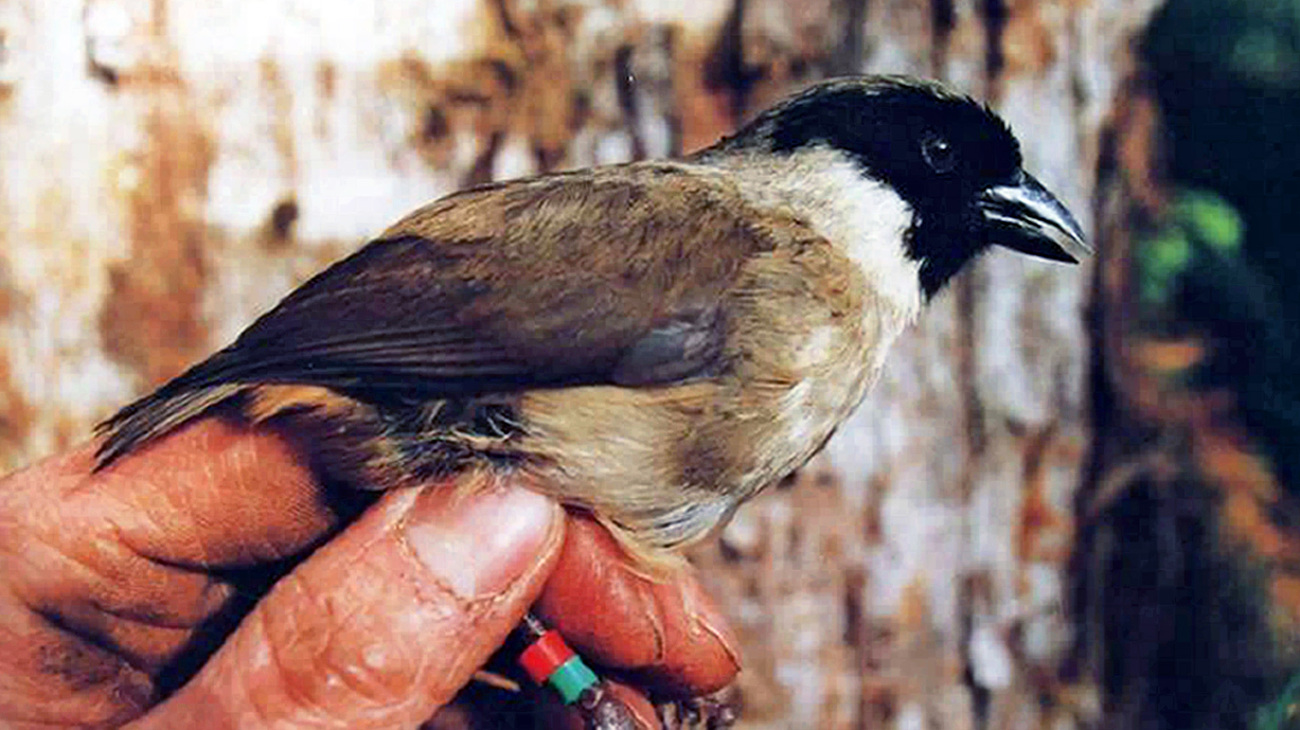
Po’ouli, also known as the black-faced honeycreeper, an extinct species. Photo: Paul E. Baker / © U.S. Fish and. Widllife Service
The poʻouli, a bird found in the forests of Maui, Hawaii, was not discovered until 1973. But it has sadly been declared extinct. It was found in a relatively limited range on the island, making the habitat degradation it faced even more pronounced. It was thought to be threatened by rat predation and competition with other species.
Alagoas foliage-gleaner
Scientific name: Philydor novaesi
Date of extinction: 2019
Found in the lowland forests of Brazil, the Alagoas foliage-gleaner, a small bird species, had a very limited range. It was only found in the states of Pernambuco and Alagoas, where deforestation is a significant problem. The forests that the Alagoas foliage-gleaner called home have been almost entirely destroyed, leading to the fragmentation and loss of the bird’s habitat and, as a result, its extinction.
Corquin robber frog
Scientific name: Craugastor anciano
Date of extinction: 2019
According to the IUCN, the corquin robber frog was only found in two sites in western Honduras at a specific altitude range and has not been seen since 1990. Living in the forests of a single mountain made this species incredibly vulnerable to habitat loss. It’s likely that the Bd fungus also played a part in the corquin robber frog’s extinction.
Cryptic treehunter
Scientific name: Cichlocolaptes mazarbarnetti
Date of extinction: 2019
The cryptic treehunter, a small brown bird, was only discovered in 2014 but may have gone extinct before the paper first describing it was even published. As with many of the animals on this list, the cryptic treehunter was only found in a very limited range in the mountains of Brazil, increasing its vulnerability to habitat loss from human activity. This is a case of extinction happening so rapidly and suddenly that any attempts at conservation became essentially impossible.
Bramble Cay melomys
Scientific name: Melomys rubicola
Date of extinction: 2016
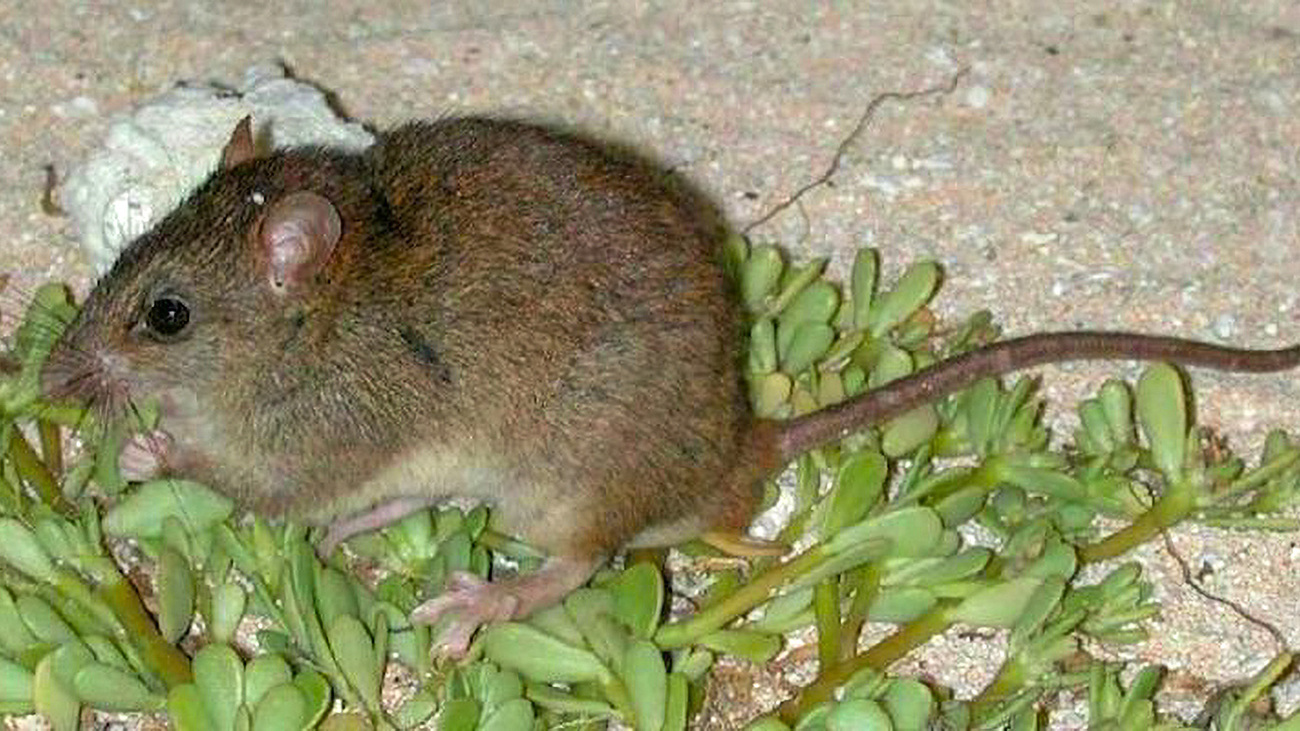
Bramble Cay melomys. Photo: Ian Bell / © State of Queensland, CC BY 3.0 Australia
The Bramble Cay melomys, a small rodent, was found only on the tiny island of Bramble Cay between Australia and Papua New Guinea. The Bramble Cay melomys population was devastated by storms and loss of vegetation on the island. The Australian government officially recognized the rodent as extinct in 2019.
Christmas Island pipistrelle
Scientific name: Pipistrellus murrayi
Date of extinction: 2016
As its name suggests, this bat was native to Christmas Island, inhabiting the forests of this Australian territory. The Christmas Island pipistrelle was the first mammal to go extinct in Australia in 50 years, although it is unclear exactly why it went extinct. Some species did experience habitat loss on Christmas Island. However, many of the forests the bats called home remained intact while populations declined. Much of their decline may have been due to predation and competition from other species.
Christmas Island whiptail-skink
Scientific name: Emoia nativitatis
Date of extinction: 2017
Another species native to Christmas Island, the last known Christmas Island whiptail-skink died in captivity in 2014. The species was then officially declared extinct by the IUCN in 2017. Much like the Christmas Island pipistrelle, these reptiles likely went extinct due to competition and predation from invasive species.
Specifically, explosions in the populations of yellow crazy ants and the introduction of wolf snakes to the island in the 1980s are likely factors behind the decline and eventual extinction of the Christmas Island whiptail-skink.
Jalpa false brook salamander
Scientific name: Pseudoeurycea exspectata
Date of extinction: 2019
Next on our list of recently extinct animals is the Jalpa false brook salamander. Last seen in 1976, experts have been unable to find any trace of this salamander in the wild in the following decades, leading to the species being declared extinct by the IUCN in 2019. The main threats to the species were habitat destruction through human activity in the forms of logging, agriculture, and aquaculture in its native Guatemala.
Bridled white-eye
Scientific name: Zosterops conspicillatus
Date of extinction: 2016
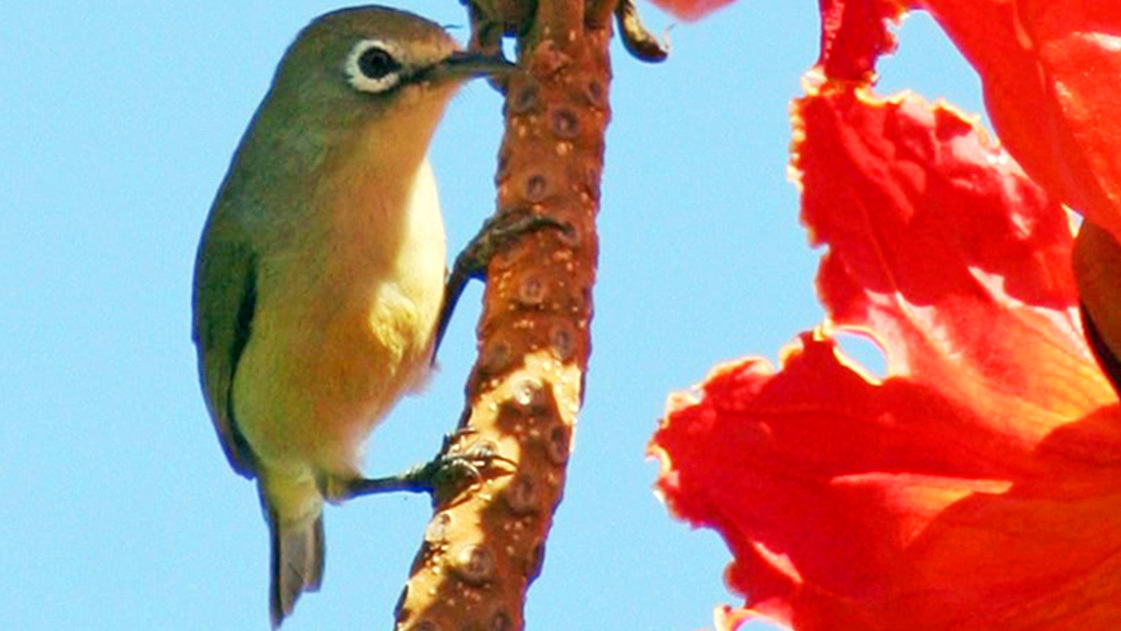
Bridled white-eye. Photo: © Peter, CC BY-SA 2.0
The bridled white-eye, a bird found only in Guam, is considered a subspecies by some sources but is classified as its own species by the IUCN. It is unknown how these birds went extinct. However, it has been speculated that predation from snakes may have been a cause behind their decline. There may have been other invasive species that played a role, but this is not confirmed.
The bridled white-eye is survived by its closest relative, the Saipan white-eye, which is native to the Northern Mariana Islands.
Kauaʻi ʻakialoa
Scientific name: Akialoa stejnegeri
Date of extinction: 2016
Formerly found on the island of Hawaii, the bird known as the Kauaʻi ʻakialoa has not been seen for 60 years and is presumed extinct. The IUCN officially declared the species extinct in 2016. It is likely that disease—in particular, avian pox—played a role in these birds’ decline. There is also evidence that habitat destruction, predation from introduced species, and hurricane damage contributed to their extinction.
Campo Grande tree frog
Scientific name: Boana cymbalum
Date of extinction: 2021
The IUCN reported that the Campo Grande tree frog went extinct in 2021. The frog hasn’t been recorded since 1963. It used to live in small pockets of forest and wetland habitat around São Paulo in Brazil, and its habitat was destroyed by urban expansion. The IUCN also lists pollution, disease, and habitat degradation as contributing causes of the Campo Grande tree frog’s extinction.
Guam reed warbler
Scientific name: Acrocephalus luscinius
Date of extinction: 2016
Initially declared extinct in 2016, the Guam reed warbler was reassessed by the IUCN in 2023, confirming its disappearance. This songbird was once found only on the island of Guam. Causes of its extinction include habitat loss from wetland drainage, an increase in fires, and pesticides. The brown tree snake, an invasive species that preyed on warblers, also helped drive the bird to extinction.
Two other members of this genus—the pagan reed warbler (Acrocephalus yamashinae) and the Aguijan reed warbler (Acrocephalus nijoi)—were also listed as extinct in 2016.
Let’s protect endangered species before it’s too late
These recently extinct animals show how much work we need to do to protect the planet and the plants and animals we share it with. We all must work together to curb the effects of climate change, safeguard animal species, and prevent further biodiversity loss.
Many animals play essential roles in their local ecosystems and can help keep the planet healthy through their natural behaviors. So, these newly extinct animals don’t just signal the loss of a single species.
The carefully controlled ecosystems to which they belong become even more unbalanced and vulnerable, which harms other animals and people in the long term. Without animals, our planet as we know it cannot exist.
Concerted efforts are in place to address species endangerment and extinction. The US 1973 Endangered Species Act (ESA) is a good example. The ESA puts programs in place to conserve at-risk animals and plants in their natural habitats. The Fish and Wildlife Service (FWS) currently implements the ESA in collaboration with the US National Oceanic and Atmospheric Administration (NOAA) Fisheries Service.
The ESA has been a tremendous success, and in the 50 years since its inception, it has saved 99% of listed species from extinction. This includes some iconic American animals like the bald eagle and certain species of alligator. However, other species have been removed from the list due to their recent extinction.
While initiatives like the ESA are a great start, as we can see from this list, we still have more work to do.
At IFAW, we work to build a future where animals and people can thrive together.
Related content
Our work can’t get done without you. Please give what you can to help animals thrive.