Wildlife Crime
Behind one rescue lies a much bigger story for primates
Behind one rescue lies a much bigger story for primates
April 22, 2026
Hopeful progress for the rescued spider monkeys
April 22, 2026
Since this story was first published, the four rescued spider monkeys have continued to make encouraging progress.
All four are improving in health and gaining weight as they recover under expert care. Their diet is also evolving, with the monkeys gradually transitioning from mainly milk and fruit to more solid foods. In the next stage, vegetables will be introduced, with the goal of helping them feed independently and develop the skills young monkeys would normally learn in the wild.
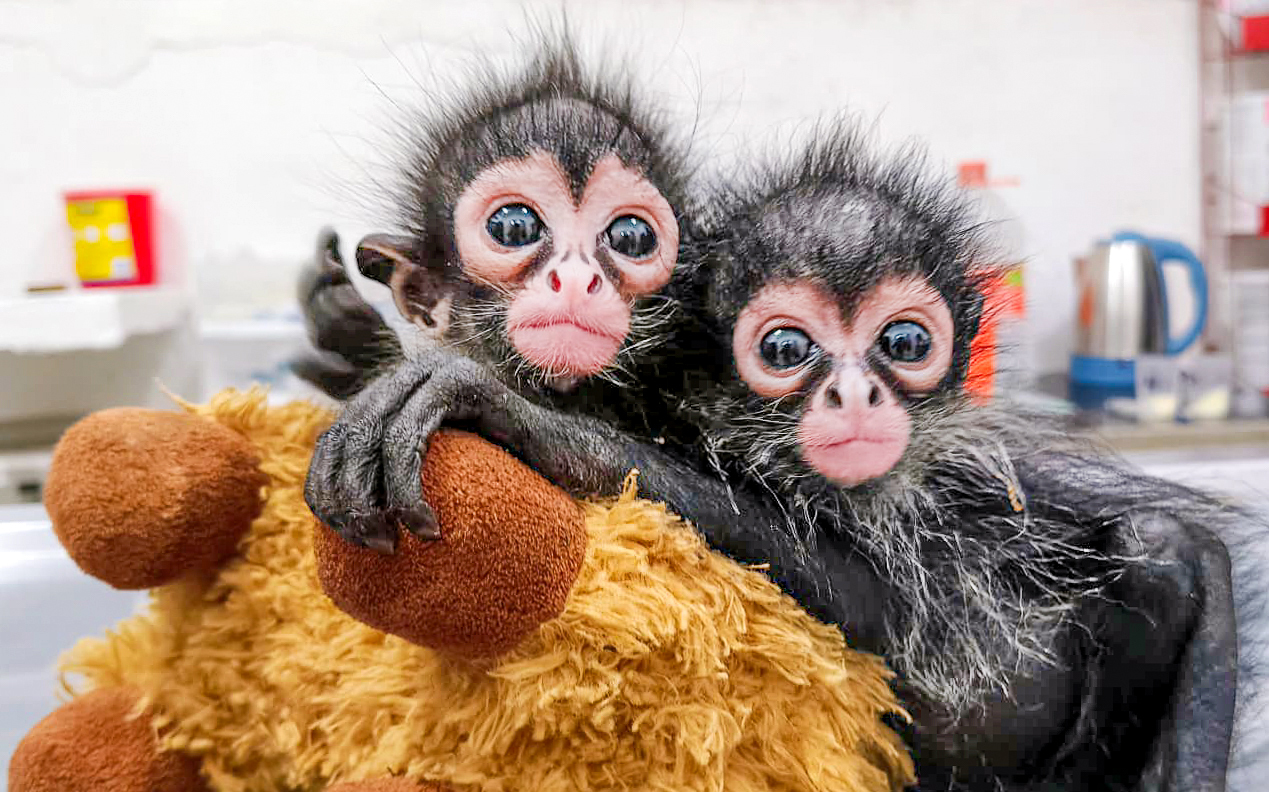
Infant spider monkeys rescued from illegal wildlife trafficking in southern Mexico receives veterinary care supported by IFAW. Photo: © Payo Obispo Zoological Park
The young female who arrived with a broken arm and in the most fragile emotional state is showing especially positive signs. She is now more alert, vocalizing more often, and actively asking to be fed, a marked change from when she spent much of the day sleeping and had to be woken for feeding.
With IFAW’s support, a new expandable enclosure has now arrived as the monkeys near the end of quarantine. Moving from temporary kennel-style housing into a larger space will allow them to begin climbing, strengthening their muscles, interacting more with one another, and expressing natural behaviors such as grooming and play. Care teams also plan to add branches over time to help develop their climbing skills and confidence.
Their long-term future is still being assessed. It is too early to know whether they could eventually meet the criteria for reintroduction or integration with other monkeys, and there are currently limited sanctuary or rescue options in the region. For now, they are expected to remain at Payo Obispo Zoological Park while authorities, the park, and IFAW continue exploring the best path forward.
While their recovery is far from over, these milestones are a hopeful reminder of what sustained care and collaboration can achieve.
Behind one rescue lies a much bigger story for primates
April 8, 2026
On 28 March, along a remote stretch of the Maya Train tracks in southern Mexico, a routine patrol took an unexpected and deeply troubling turn.
Members of the National Guard were conducting inspection rounds when they spotted a group of people in the distance. As officers approached, the individuals fled, abandoning several sacks on the ground. Given the context, there was immediate concern. To their surprise, the sacks were moving.
Inside were four baby spider monkeys, bound and hidden, their lives reduced to cargo in the illegal wildlife trade.
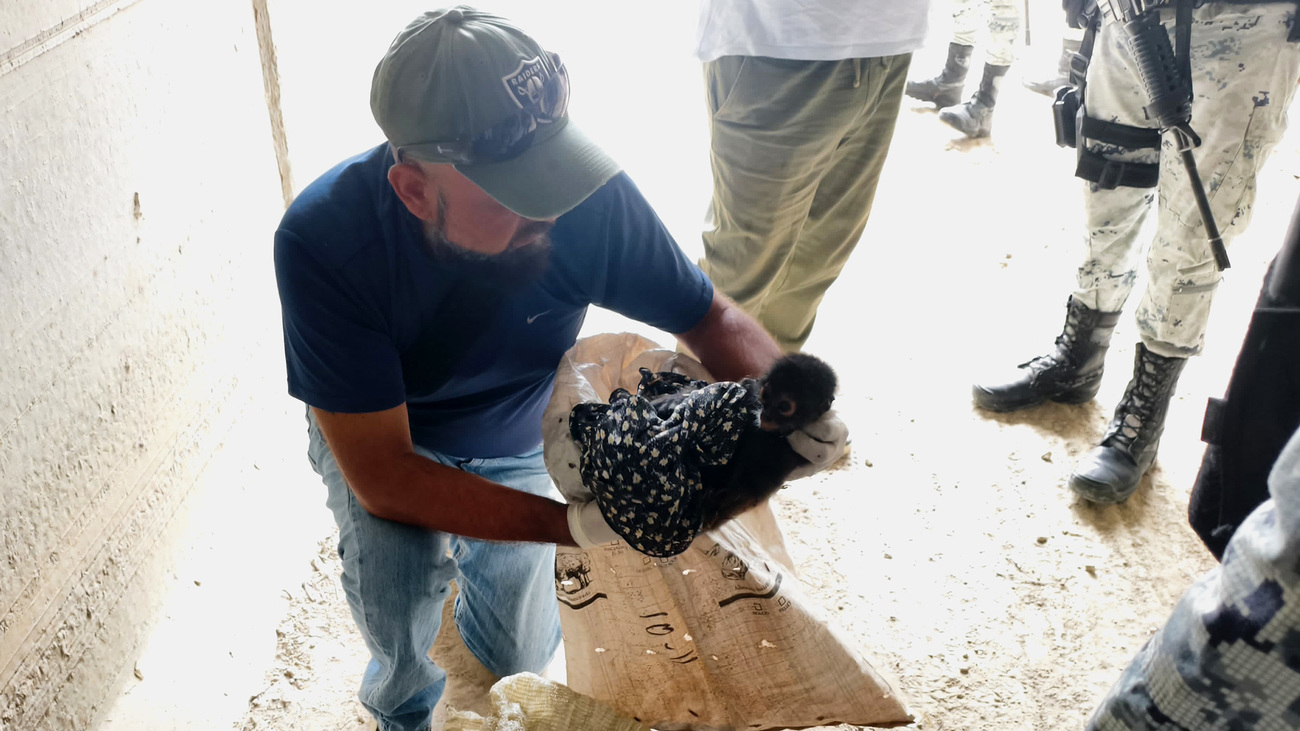
An infant spider monkey rescued from illegal wildlife trafficking in southern Mexico. Photo: Salvador E. Julio Cardoso / © IBANQROO
A narrow window for survival
Authorities quickly alerted Mexico’s Federal Attorney's Office for Environmental Protection (PROFEPA) and the Institute of Biodiversity and Natural Protected Areas of Quintana Roo (IBANQROO), who intervened to secure the animals and begin the rescue process.
The four monkeys, one male estimated to be five to six months old, and three females just two to three months old, were in poor condition. All were malnourished and dehydrated, and one of the youngest females had suffered a fractured arm.
With IFAW’s support, the monkeys were transferred to a specialist wildlife veterinarian, where they received urgent care, including stabilisation of fluids and diagnostic imaging. They have since been moved to Payo Obispo Zoo in Chetumal, where veterinary teams continue to monitor their recovery and provide ongoing care.
The three young females weighed just 475, 625, and 620 grammes on arrival and are estimated to be between two and four months old. The male weighed just over one kilogramme, making him slightly older at around six to eight months.
While they are now safe, their future remains uncertain. Spider monkeys are highly social animals, and as infants they are entirely dependent on their mothers and troop members. Having been separated so early, and now forming attachments to human caregivers, their chances of successful reintroduction to the wild are significantly reduced.
The violence behind the trade
To capture baby spider monkeys, poachers must first kill their mothers, and often other members of the troop who attempt to protect them. Entire family groups are torn apart in the process, leaving surviving infants traumatised and vulnerable.
In this case, the poachers fled the scene, likely aware of the serious legal consequences. In Mexico, native primates such as spider monkeys cannot be legally traded under any circumstances, meaning any animal taken from the wild and sold is part of an illegal market. On a global level, protections are also in place, with two subspecies listed under Appendix I of CITES, which prohibits international commercial trade, and others listed under Appendix II, where trade is strictly regulated.
Yet despite these protections, the trade continues.
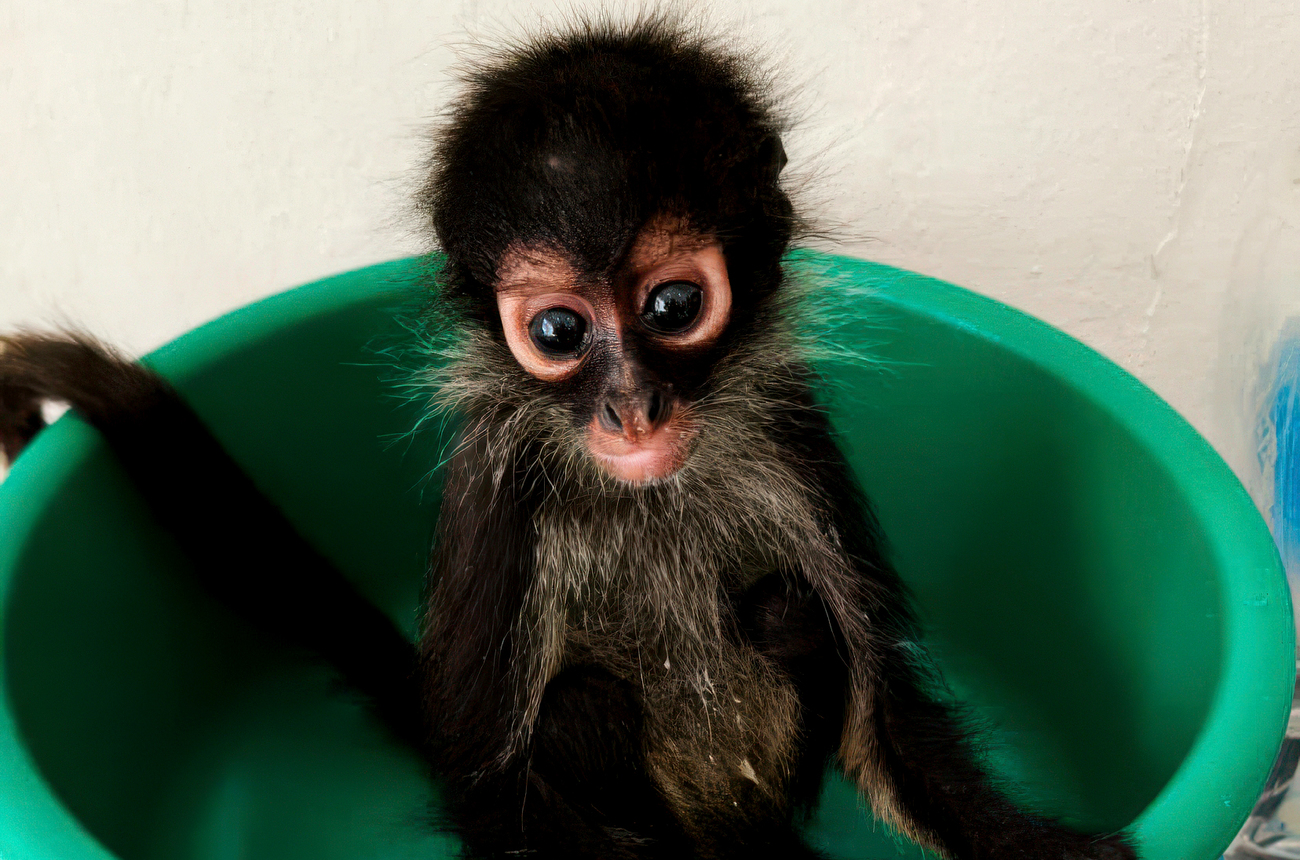
An infant spider monkey rescued from illegal wildlife trafficking in southern Mexico receives veterinary care supported by IFAW. Photo: © Payo Obispo Zoo
Demand is driving a dangerous market
The four monkeys rescued along the Maya Train route were likely destined for sale as pets, part of an illegal market that continues to thrive across borders.
As documented in recent trafficking cases, baby spider monkeys are routinely smuggled in cruel and dangerous conditions, hidden in bags, vehicles, and containers, with little regard for their survival. Their value increases significantly once they reach buyers, particularly in markets where exotic pet ownership is still permitted.
This demand is one of the greatest threats facing the species today. While habitat fragmentation, infrastructure development, climate change, and invasive species all play a role, the exotic pet trade creates a direct and immediate incentive to remove animals from the wild.
Why stronger protections are urgently needed
Although Mexico has strong legal protections in place, wildlife trafficking does not stop at national borders. The continued demand for primates as pets, particularly in countries where ownership laws are inconsistent, undermines these efforts.
In the United States, the patchwork of state regulations allows primates to be legally owned in some areas, creating loopholes that traffickers exploit.
This is why IFAW is advocating for the Captive Primate Safety Act, which would prohibit the private ownership of primates as pets at the federal level. By reducing demand and closing legal gaps, this legislation would address one of the root causes of trafficking, helping to prevent cases like this before they happen.
From rescue to recovery
For these four young spider monkeys, survival is only the first step.
Their recovery will require ongoing veterinary care, careful behavioural management, and, if possible, placement in an environment where they can develop alongside other monkeys. Every stage of this process is complex, particularly given their early separation from their mothers.
This rescue was made possible by the vigilance of the National Guard and the swift response of environmental authorities, supported by IFAW and partners. It is a powerful example of what coordinated action can achieve.
At the same time, it underscores a difficult truth. Without addressing the demand that drives this illegal trade, rescues will continue to be reactive rather than preventative.
What you can do to help protect primates
There is a clear role for individuals in helping to address this issue, particularly when it comes to reducing demand.
Choosing not to engage with or share content that promotes primates as pets is one important step, while supporting stronger legal protections, reporting suspected wildlife trafficking, and backing organisations working on the frontlines of rescue and conservation are equally critical.
Collectively, these actions contribute to a shift in perception and, ultimately, to a reduction in the market that drives this trade.
A future where primates belong in the wild
Spider monkeys and other primates play an essential role in maintaining healthy ecosystems, particularly through seed dispersal in tropical forests. Protecting them is not only about safeguarding individual animals, but also about preserving bodiversity and communities that depend on these species.
This latest rescue is a reminder of both the urgency of the problem and the possibility of change. With stronger protections, increased awareness, and sustained collaborative action across borders, it is possible to move towards a future where primates are no longer taken from the wild, but allowed to thrive within it.
Related content
Our work can’t get done without you. Please give what you can to help animals thrive.