Asian elephant protection – China
Conserving Asian elephant populations through coexistence initiativesFrom the ground up: launching a network for people and elephants
From the ground up: launching a network for people and elephants
January 20, 2026
Blog series: Part 1 of 3
By Dafan Cao, Program Officer with IFAW’s Asian Elephant Protection project in China
Part 2: From fear to trust: a community ranger’s path to protection
Part 3: From conflict to coexistence: the path forward for people and elephants
I first met Jie Li in 2018, in Mengban—a small border town nestled in the forests of southwest China. At the time, he was a quiet villager with a bright, unguarded smile. Six years later, when I returned as part of our expanded human–elephant safety program, that smile was still there. But something in him had changed. His posture, his movement, the way he spoke to others—it all carried the quiet confidence of someone who had learned, through experience, what it means to live with elephants.
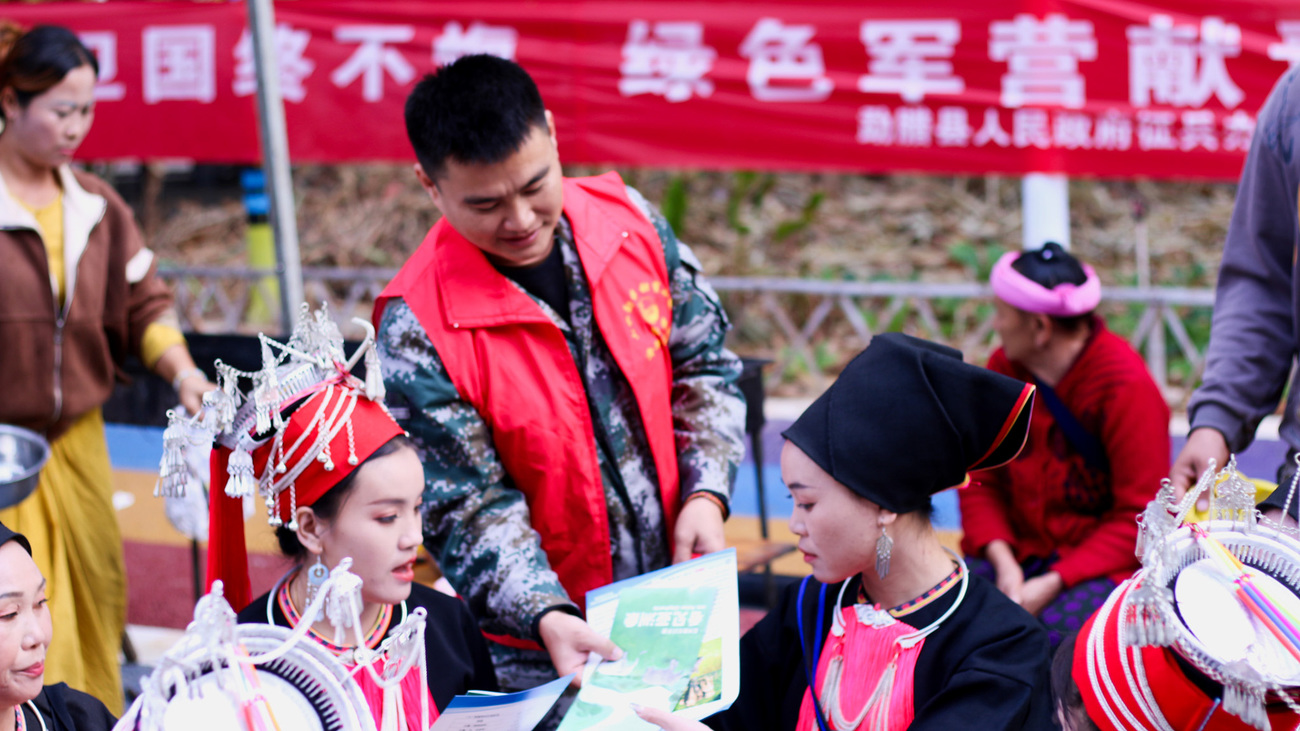
Ranger Li Jie shares information on human-elephant safety precautions with local community members in Mengla County, China. Photo: © IFAW
Back then, the idea of a local community ranger network was still forming. Human–elephant conflict had been on the rise for years, with elephant movements increasingly crossing into farmland and village centers. While people in Yunnan Province have shared space with wild elephants for generations, population growth, land-use shifts, and climate change were all increasing pressure on both humans and animals. It was no longer enough to rely on emergency alerts or one-time trainings. We needed something deeper—embedded knowledge, trust, and daily action.
In 2021, IFAW, in partnership with the Jinghong Forestry and Grassland Administration, officially launched the Community Ranger Network Initiative. The goal was simple: equip and train local community members to become frontline monitors and educators. These rangers would share safety knowledge, assist in early-warning systems, and most importantly, serve as the vital link between people and the elephants they live alongside.
Jie was one of the first.
He told me that at first, the work was just something new—an opportunity to learn a skill beyond farming. He had grown up harvesting sugarcane and tapping rubber. The income from rubber was good again, and many of his peers stayed in the fields. But this work, Jie said, gave him something else. "It opens your world," he told me. "It gives you purpose."
That purpose, though, came with fear. Before joining the initiative, Jie had experienced a terrifying close encounter with elephants during a night-time harvest. As villagers scattered into the trees, Jie found himself face-to-face with a massive bull. Frozen in place, heart pounding, he expected the worst. But the elephant simply turned and walked away. That moment left a mark—was coexistence really possible?
Years later, as a trained ranger, Jie still feels that fear. But he carries it differently now. "It’s because I’m afraid that I know I must build a good relationship with them," he said. And that relationship is built, step by step, patrol by patrol, conversation by conversation.
With support from IFAW and our partners, Jie and his fellow rangers have been equipped with practical tools—boots, flashlights, uniforms—to make their work safer and more effective. More importantly, they’ve received training on elephant behavior, community engagement, and field monitoring techniques. These are not high-tech interventions, but they make a meaningful difference.
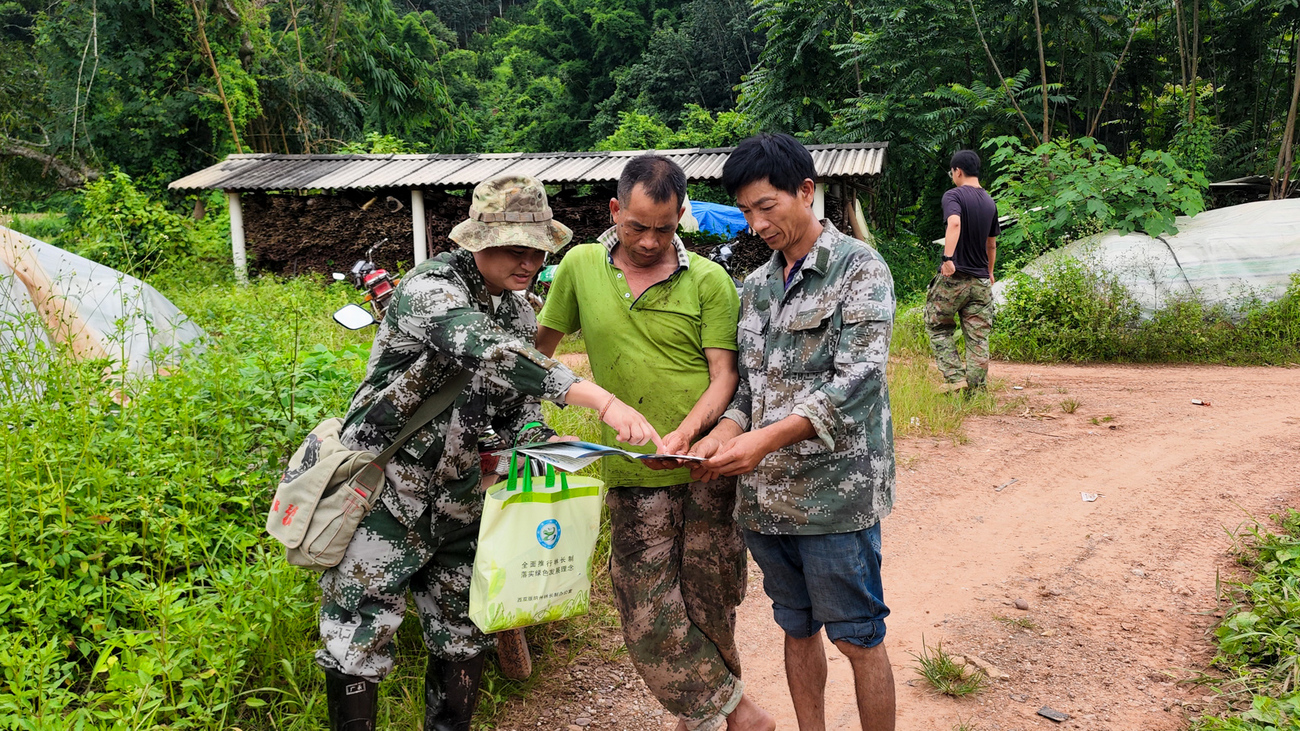
Ranger Li Jie discusses human-elephant coexistence practices with community members in a rural area near Mengla County, China. Photo: © IFAW
In the early days, villagers often viewed the rangers with skepticism. If crops were damaged, they wanted someone to blame. Why hadn’t the rangers chased the elephants away? But gradually, things began to shift. As rangers returned to the same fields, the same families, day after day, trust grew. Villagers began to share their own sightings, to ask questions, to change their routines during elephant migration season.
"People here might not know the name of their township leader," Jie said with quiet pride, "but they know us."
The Community Ranger Network now operates across multiple townships, with rangers trained and deployed in both Jinghong and Mengla. As of September 2025, more than 28,000 villagers have been reached through the program, with the proportion of residents receiving safety education rising markedly from 36% to 65%. According to a 2024-2025 project evaluation, community awareness and positive attitudes towards elephant conservation have improved significantly. More residents now adjust their farming schedules and locations based on early warning information, effectively reducing the risk of encounters.
What began as a modest initiative in 2021 is becoming a model for coexistence. And at the heart of it are people like Jie—individuals who have chosen to walk the narrow path between fear and understanding.
Their work is often unseen. They travel muddy roads, spend long nights on watch, and carry the invisible weight of keeping both elephants and people safe. But their impact is clear. Because of them, fewer lives are lost. Fields are protected. And communities are beginning to see elephants not as threats, but as neighbors.
This is part one in a three-part series. And in the next story, we will travel to Mengla, China to meet another ranger—one who stood silently in the back of a crowded training, and who, over time, would come to find his own voice in this growing network of guardians.
Related content
Our work can’t get done without you. Please give what you can to help animals thrive.