Rescuing animals during bushfires - Australia
For over 30 years we’ve been on the ground helping animals affected by bushfiresKoala facts and statistics
Koala facts and statistics
December 10, 2025
Koalas—the grey, furry animals from Australia that carry their joeys in pouches—are some of the most beloved animals on the planet. They attract tourists to the continent by the masses and are of vital importance to their ecosystems. Sadly, though, in 2025, they are in danger of extinction.
At IFAW, we work to protect koalas and other wildlife around the world, through conserving their habitats, rescuing animals in danger, and engaging communities. We’re helping koala habitats to recover from bushfires and, with partners in Australia we help support the critical veterinary teams and volunteers who rescue, rehabilitate and release koalas.
Read on to learn some of our favourite facts about koalas, including a few things that may surprise you. We’ll clear up the misconception that koalas are bears (they’re not!), see how many koalas are left in the wild, and tell you what to do if you see a sick or injured koala.
16 interesting facts about koalas and FAQs
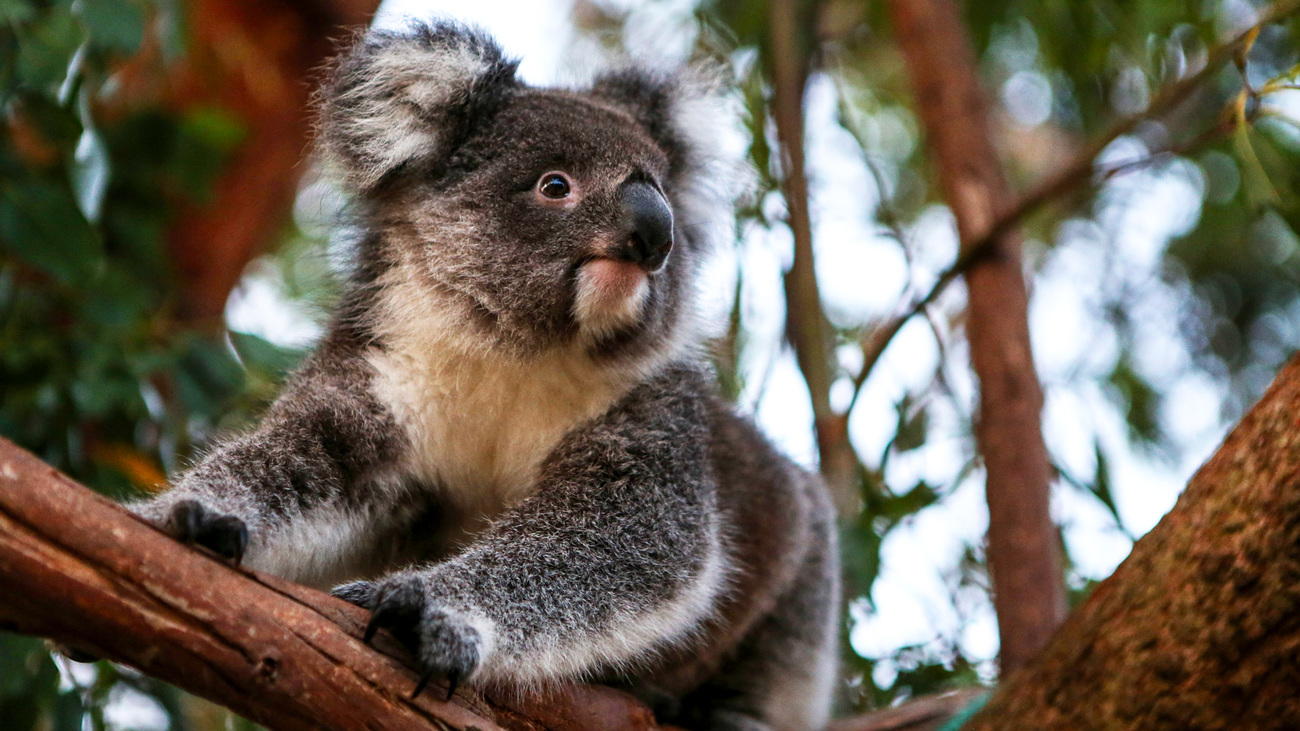
A rescued koala in rehabilitation sits in a tree in Tracey Wilson's yard. The tree serves as a soft release site for the koala until it's healthy enough to be returned into a wild environment. Photo: Melanie Mahoney / © IFAW
Are koalas bears?
Despite the widespread colloquial use of the term ‘koala bears’, koalas are not actually bears—they are marsupials. European settlers that arrived in Australia inaccurately called koalas ‘bears’ because of their resemblance to bears. Their scientific name, Phascolarctos cinereus, actually means ‘pouched bear’. But koalas are not members of the bear family, Ursidae; rather, they are the only members of the family Phascolarctidae.
Do koalas have pouches?
Koalas are marsupials, which means yes, they have pouches. Unlike kangaroo pouches, which have an opening at the top, koala pouches have a more centrally located opening, which the mother keeps closed using a strong sphincter muscle. The pouch protects young koalas, called joeys, from injury while the mother climbs among trees.
How long do koalas live?
On average, koalas can live for 10 to 12 years in the wild. Females can live up to 18 years and continue breeding in their older years, while males are thought to have a shorter lifespan. Koala lifespan is impacted by the threats koalas face in the wild. These include disease, vehicle collisions, habitat loss, and predation by dogs and other animals.
How many koalas are there in the wild in 2025?
It’s difficult to determine precise numbers. Because koalas are so difficult to spot in the wild and are distributed across such large areas, there is no consistent mapping or monitoring method.
One thing we know for sure is that there used to be millions of koalas in Australia, but now, in some areas, you are lucky to see even one in the wild. Their numbers are plummeting in Queensland and New South Wales, and while they are considered more abundant in other areas, they face a multitude of threats.
Are koalas friendly? Are koalas mean?
Despite their cute and cuddly appearance, koalas are wild animals that can become aggressive. Koalas have sharp claws and teeth. They can easily cause injury to a human if they feel threatened or stressed and lash out.
Like all wild animals, koalas shouldn’t be approached unless they’re injured, sitting or lying on the ground for an extended period of time, or otherwise in need of help. If you see a koala in the wild that appears injured or sick, use IFAW’s Wildlife Rescue App to contact your local wildlife authorities to report the situation.
How many joeys are born at a time?
Koala mothers usually have one joey per year and, on rare occasions, give birth to twins. The breeding season is generally between August and February, in the Australian spring and summer months. During this time, the usually solitary koala becomes more active and mobile. Males travel in search of a mate, and newly independent koalas leave their mothers to establish their own home range.
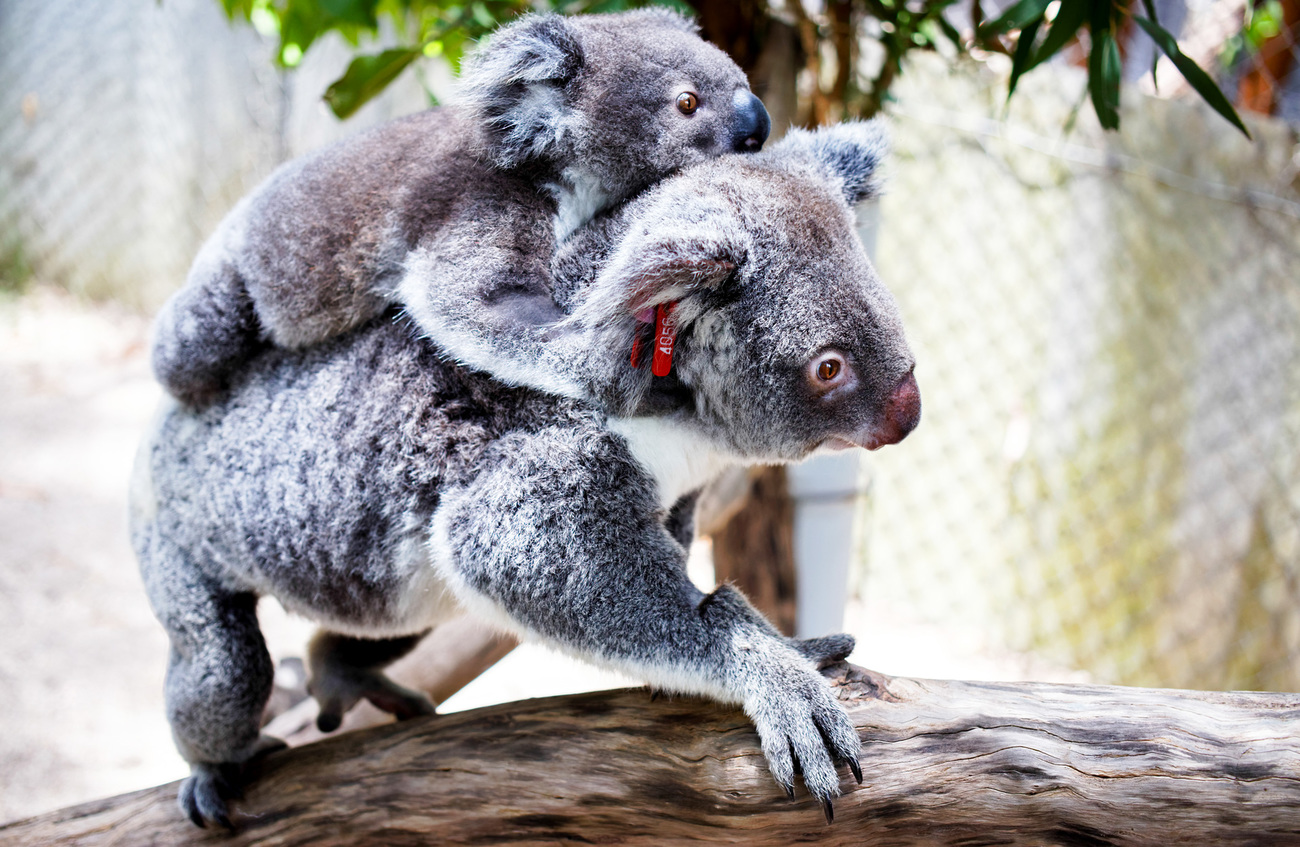
Charlotte with Keogh on her back while in care at Friends of the Koala. Photo: Brad Mustow / © Friends of the Koala
How long do koala joeys stay in their mothers’ pouches?
Koala joeys usually stay in their mothers’ pouches for about five months. After this, they will ride on their mothers’ backs and remain there until they are almost one year old, at which point they can live more independently.
How long is a koala’s gestation period?
Female koalas are pregnant for 34 to 36 days, a relatively short gestation period when compared to all mammals, but average when compared to just marsupials. Their gestation period doesn’t need to be as long because once the joey emerges, the mother koala continues to carry it with her in her pouch.
What do koala joeys eat?
Koala joeys cannot regulate their own body temperatures at first, so they rely on their mothers for warmth and milk. Mothers have two teats or nipples in the pouch, which allow young koalas to feed on milk produced by glands in the mother’s abdomen. At about five months, joeys pop their head outside the pouch to feed on ‘pap’, a substance the mother produces in addition to milk. Pap contains vital live bacteria that help prepare the joey’s stomach for the transition from milk to eucalyptus leaves. However, the baby koala may also continue to suckle on milk until it reaches one year old.
How much do koalas weigh?
Adult koalas generally weigh up to 14 kilograms (30 pounds). The average size and weight of koalas vary by region—adult female koalas in Queensland weigh five to six kilograms (11 to 13 pounds) on average, and adult males in Queensland weigh six to eight kilograms (13 to 17 pounds). In comparison, adult female koalas from Victoria weigh 8.5 kilograms on average (18 pounds), and adult males weigh 12 kilograms (26 pounds).
When they are born, koala joeys weigh less than 1 gram (0.035 ounces) and grow rapidly during their time in the pouch due to a high-protein diet of milk that is produced by specialised glands inside the mother’s body. By the time a joey is 24 weeks old, it weighs at least 500 grams (17 ounces).
What do koalas look like?
Koalas are medium-sized marsupials with large, round heads, mostly grey fur, fluffy ears with some white fur, and large, black noses. They also have some white fur on their chests, inner arms, and bottoms. On their noses and the palms of their paws, koalas have no fur.
Though they look fluffy and fuzzy, koalas’ fur is coarse, like sheep’s wool. Their fur colour varies from grey to light brown, and it can depend on the koala’s region. Queensland koalas appear lighter in colour and have less fur than those in New South Wales, Victoria, and South Australia.
Koalas have long, sharp claws, which make them well-suited for climbing trees. They also have opposable thumbs, giving them a good grip.
Adult male koalas are generally larger than adult female koalas. Males have much larger heads and noses than females, and they have large scent glands in the middle of their chests that appear pink.
How long does it take for koala joeys to develop the skills needed for independent living?
Koala joeys stay with their mothers until they are almost one year old, developing important life skills such as climbing trees and finding food before venturing out on their own. This means that female koalas usually only produce one joey each year. They have little opportunity to breed while caring for their young.
Are koalas endangered?
Populations of some species have declined dramatically over the last century or so due to habitat loss, disease and dog attacks. In 2025, the IUCN lists the koala as vulnerable on its Red List of Threatened Species.
Koalas are listed as endangered in Queensland, New South Wales, and the Australian Capital Territory under Australian national environmental laws (Environmental Protection and Biodiversity Act 1999).
What are threats to koalas?
There are numerous threats to koalas in the wild.
Land clearing, urbanization, and logging are all leading to koala habitat loss. As koalas are brought into closer proximity to humans, they’re at greater risk from pet dogs and vehicle collisions.
Another major threat to koalas is climate change. Rising CO2 levels in the atmosphere are decreasing the nutritional quality of eucalyptus leaves—a koala’s sole source of food. This puts koalas at risk of malnutrition and starvation.
Hotter and drier weather also reduces the water content of eucalyptus leaves, so koalas need to leave the safety of the trees in search of other water sources. Changing weather patterns and drier habitats can lead to bushfires, which put koalas and their habitats in further danger.
Disease is another major issue facing koala populations. Chlamydia, a sexually transmitted bacterial infection, is a particular problem. It can cause blindness and infertility in koalas, and is often fatal. It accounts for up to 50% of koala deaths. In 2025, it’s hoped that a new and proven vaccine can protect koalas from this deadly disease.
Australia has the world’s highest mammal extinction rate. Weak environmental laws in the country have failed to protect its unique animals and landscapes. Act now to help protect koalas and Australia’s other wildlife.
What is IFAW doing to help koalas?
We’ve been working to recover and reconstruct koala habitats after the Black Summer bushfires of 2019–2020.
Alongside our partners, we’ve been planting trees and creating wildlife corridors. With our partners the Great Eastern Ranges, we have been working on our Koala Climate Corridors project, which aims to create wildlife corridors that assist native animals in adapting to the changing climate and build the resilience of our communities and land. Koalas are an umbrella species—by protecting them, we indirectly protect countless other species. They are also one of 10 global species most vulnerable to climate change. By focusing on them, we can help countless other species.
Our partner Two Thumbs Wildlife Sanctuary in New South Wales, was completely destroyed by the fires. In the aftermath, we deployed IFAW–UniSC koala detection dog Bear, who found eight koalas in need of rescue. Five years on, we returned to the sanctuary with Bear and found 18 healthy koalas, including four joeys—a sign that the population is recovering.
With Friends of the Koala and Mosswood Wildlife, we’re working to rescue, rehabilitate, and release injured and orphaned koalas—giving them a second chance at life in the wild.
In Victoria, despite koalas not being endangered, we are witnessing an ecological and welfare crisis. We continue to advocate to stop the root cause of the koala welfare emergency: habitat destruction. Our petition calling for an inquiry into this crisis has well over 100,000 signatures from around the world. We will leverage this support to lobby the government to find long-term solutions to save our iconic species.
We’ve also invested in a ground-breaking research project with our partners at the University of the Sunshine Coast, whose detection dogs locate koalas in the wild. This allows a conservation team to collect data about the genetics and health of koala populations, allowing us to protect individuals and better conserve ecosystems.
Our Wildlife Rescue App is helping Australians locate their nearest animal rescue team when they find injured wildlife. We’re also training veterinarians in the triage and treatment of animals harmed in bushfires.
Finally, we continue to advocate for stronger environmental laws to protect our native wildlife.
What can you do to help?
Every one of us has a part to play in securing a future for koalas and the places they call home. Individuals can make a tangible impact by planting trees themselves.
If you want to help us call on the Australian government to strengthen our national environment laws to protect wildlife like koalas and the places they call home, you can sign our petition. You can also support our calls for a parliamentary inquiry into the crisis facing Victoria’s koalas here.
Share your support of IFAW on Facebook, Instagram, Twitter, or TikTok.
If you’re in Australia, you can download the free IFAW Wildlife Rescue App to help report injured or distressed wildlife and contact the appropriate teams to rescue them.
Related content
Our work can’t get done without you. Please give what you can to help animals thrive.