Danielle Kessler
Sloths belong in the wild, not in the wildlife trade
Sloths belong in the wild, not in the wildlife trade
Danielle Kessler | October 20, 2026
There is something extraordinary about sloths. Their gentle expressions, unhurried movements, and seemingly peaceful nature have made them beloved around the world. But the very qualities that make sloths so endearing to us are also making them increasingly vulnerable to exploitation.
Earlier this year, we learned of a devastating tragedy in Orlando, Florida, where at least 55 sloths imported for a planned tourist attraction called "Sloth World" reportedly died before the facility had even opened its doors. Some arrived dead or died shortly after delivery. Others perished after being kept in a makeshift warehouse without adequate heating. These animals had been taken from the tropical forests of South America, only to suffer and die in conditions entirely unsuited to their needs.

Close-up of a pygmy three-toed sloth.
It is difficult to comprehend how so many animals could lose their lives in pursuit of an attraction designed to entertain people. More troubling still, the business was able to continue importing sloths even after the initial deaths.
Thankfully, Sloth World never opened, and 13 surviving two-toed sloths were transferred to Central Florida Zoo and Botanical Gardens where they received 24/7 care from the dedicated animal care team, and emergency veterinary care and rehabilitation, supported in part by IFAW. For these animals, receiving specialized care offers a chance for a better future. But their survival should not distract us from the larger question of how we prevent other sloths from suffering the same fate.
Why sloths are especially vulnerable to wildlife trafficking
Sloths have spent millions of years evolving to thrive in a very particular environment. Their slow movements are not a sign of laziness but a remarkable adaptation that helps them conserve energy. Their specialized diets, slow metabolisms, and dependence on stable tropical conditions make them uniquely suited to life in the forest canopy.
They are also largely solitary animals, with natural behaviors that are easily misunderstood. Unlike animals that might run away or fight when threatened, sloths often remain still, relying on camouflage to avoid detection. To an unfamiliar observer, a sloth being handled or held for a photograph may appear relaxed. In reality, that stillness can conceal significant stress.
Yet demand for sloths as exotic pets and attractions for tourist encounters continues to fuel their removal from the wild. Young sloths may be separated from their mothers, transported over long distances, and placed in environments where their basic physical and behavioral needs cannot be met. Many do not survive.
This trade causes immense suffering to individual animals, but the consequences extend beyond those directly affected. Sloths are part of the intricate ecosystems of Central and South America's tropical forests, contributing to the biodiversity that helps these ecosystems function. Removing animals from the wild for commercial exploitation undermines the natural systems we should be working to protect.
And when we consider the vital role healthy tropical forests play in supporting biodiversity and regulating our climate, protecting the wildlife that belongs in them becomes all the more important.
A chance to prevent the next tragedy
The deaths in Orlando exposed a troubling gap in protections for sloths entering the United States. While many people might assume that importing wild animals for commercial entertainment is already tightly restricted, this tragedy demonstrated just how vulnerable sloths remain.
That is why IFAW is supporting the newly introduced Stopping Legalized Organized Trafficking and Harm to Sloths (SLOTHS) Act, championed by Representative Maxwell Frost alongside Congresswoman Laurel Lee.
The legislation would prohibit the importation of sloths into the US, with narrow exceptions for deceased animals used in scientific research and sloths already in captivity being transferred to accredited zoological facilities under conservation-focused programs. It would also establish penalties for violations, helping ensure these protections have meaningful consequences.
This is a practical and necessary step toward reducing the commercial demand that puts sloths at risk. By restricting importation of these animals, we can help prevent more sloths from being taken from their natural habitats and subjected to the stresses of transport, captivity, and public encounters.
Importantly, the legislation recognizes that responsible conservation and specialist animal care are fundamentally different from exploiting wildlife for profit. The surviving sloths from Orlando are a poignant reminder of why accredited facilities and experienced veterinary teams have such an important role to play when animals cannot safely return to the wild.
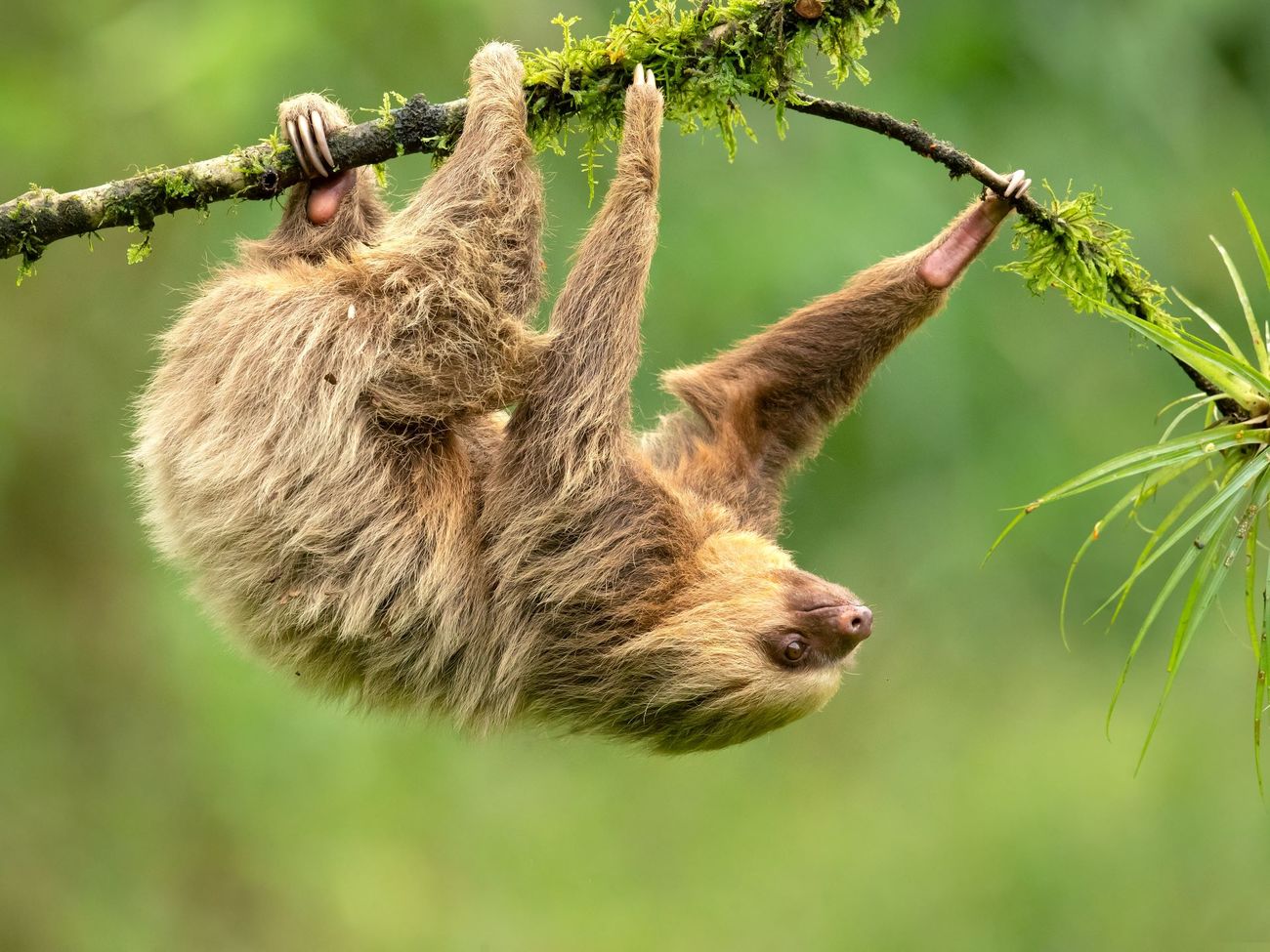
Hoffmann’s two-toed sloth hanging upside-down in a tree.
Protecting wildlife starts with the choices we make
At IFAW, we believe every individual animal matters. The suffering of a single sloth is reason enough to act, and the loss of so many animals in Orlando makes the need for stronger safeguards impossible to ignore.
But we also know meaningful change is possible. The stoppage of Sloth World, the care now being provided to the surviving animals, and the introduction of this legislation demonstrates what can happen when people speak up for wildlife and work together to protect it.
The Sloth Institute and the Sloth Conservation Foundation have been instrumental in bringing attention to the plight of these animals, and we are proud to stand with them in supporting stronger protections.
There is also an important role for each of us. We can choose not to participate in wildlife encounters that involve handling wild animals for entertainment. We can question attractions that offer close contact with species whose needs are poorly understood. And we can make our voices heard when opportunities arise to strengthen the laws that protect vulnerable wildlife.
Sloths do not need us to hold them, pose with them, or bring them into our homes to appreciate how remarkable they are. They need us to respect the extraordinary lives they have evolved to lead in the wild.
The SLOTHS Act gives us an opportunity to turn the lessons of a terrible tragedy into lasting protection. I'm grateful to Congressman Frost and Congresswoman Lee for their leadership in introducing this legislation, and to State Representative Eskamani for helping bring greater transparency to the exploitation of sloths for entertainment.
Now, we need more voices to help move this legislation forward. If you live in the US, urge your Representative to support the SLOTHS Act and help keep sloths where they belong, in the wild.
Our fascination with wildlife should inspire us to protect animals, not put them in harm's way. Sloths deserve to live as nature intended, and together, we can help ensure our appreciation for these remarkable animals never comes at the expense of their wellbeing or their lives.
Related content
Our work can’t get done without you. Please give what you can to help animals thrive.