Neil Greenwood
Why does IFAW rescue wildlife?
Why does IFAW rescue wildlife?
Neil Greenwood | November 30, 2025
As we face escalating global challenges like climate change and the sixth mass extinction, reckoning with the huge scale of solutions needed to solve them can be daunting. Measured against such looming threats, something as small as saving the life of one animal may seem like a drop in the ocean compared to the wave of action we need.
Pardon the interruption, this is an urgent update:
US aid was paused, putting $5M in IFAW projects at risk and jeopardizing wildlife protection worldwide. Funding cuts stalled critical programs to combat wildlife trafficking, protect ecosystems, and support community-led conservation.
🚨 Can you chip in to help keep our critical work going?
However, as someone who has spent more than 20 years working in wildlife rehabilitation, I can tell you that not only is rescuing wildlife from human-caused incidents a moral imperative—it’s also a tangible and inspiring way to help bring species and ecosystems back from the brink.
The human responsibility to help wild animals
Wildlife currently faces a myriad of threats: poaching for bushmeat, traditional medicine, and the exotic pet trade; loss of habitat due to development, resulting in increased conflict with humans as development further encroaches on nature and forces more encounters; and other human activities like motor vehicle accidents.
I would estimate that 95% of the animals that come into rescue and rehabilitation facilities are the casualties of a human-induced situation. Some have been orphaned after their parents were killed, leaving them defenseless. Others arrive injured from a snare trap, or malnourished after being confiscated from a wildlife crime seizure or a cage in someone’s backyard.
Clearly, humans have greatly influenced the conditions that have made these rescues necessary, and therefore I believe it’s our responsibility to look after these individuals. Every animal’s life matters—not only from a welfare perspective, but also a humanitarian perspective. If, for example, a baby bonobo loses her mother due to bushmeat poaching, we cannot stand by and do nothing if our actions could prevent further suffering and help an endangered species.
How rescue supports conservation
Beyond the moral argument, another reason wildlife rescues are so important is because they can make or break the success of conservation efforts. If Earth’s ecosystems were in balance, the loss of individual animals here or there wouldn’t mean much for species’ fate. However, given the severity of the extinction crisis, today we have critically endangered species such as the African penguin and the northern white rhino, whose numbers are down to the point where every individual equates to a massive percentage of that population—as well as genetic diversity that is critical for the species’ survival.
The future of many highly threatened species may depend on how many animals we can save today. When rehabilitation efforts are successful, we can reintroduce those animals back into the wild, where they become a valuable part of the population. For instance, if we save the life of a female elephant calf, how many offspring will she go on to have in her lifetime? When you start to look at the exponential impact of that, it can make a big difference for the species.
Just look at the California condor, whose species was down to only 23 individuals by the early 1980s. Shortly thereafter, the remaining birds were captured to begin a captive-breeding programme to help save the species from extinction. As of 2024, there are now 568 California condors, with the majority of those living back in the wild. While the species remains threatened, this is a remarkable revival made possible by human intervention.
Many of the solutions that help us fight the extinction crisis—changing laws and enforcing them, securing protected areas, working with communities to establish alternative livelihoods, and influencing consumer behavior to reduce demand for wildlife products—are inherently slow processes that are usually plagued with bureaucracy. By doing hands-on wildlife rescues, we can act as a stopgap, keeping the species hanging on until those larger mechanisms can be bolstered to adequately protect critical ecosystems and species.
Rescue informs research
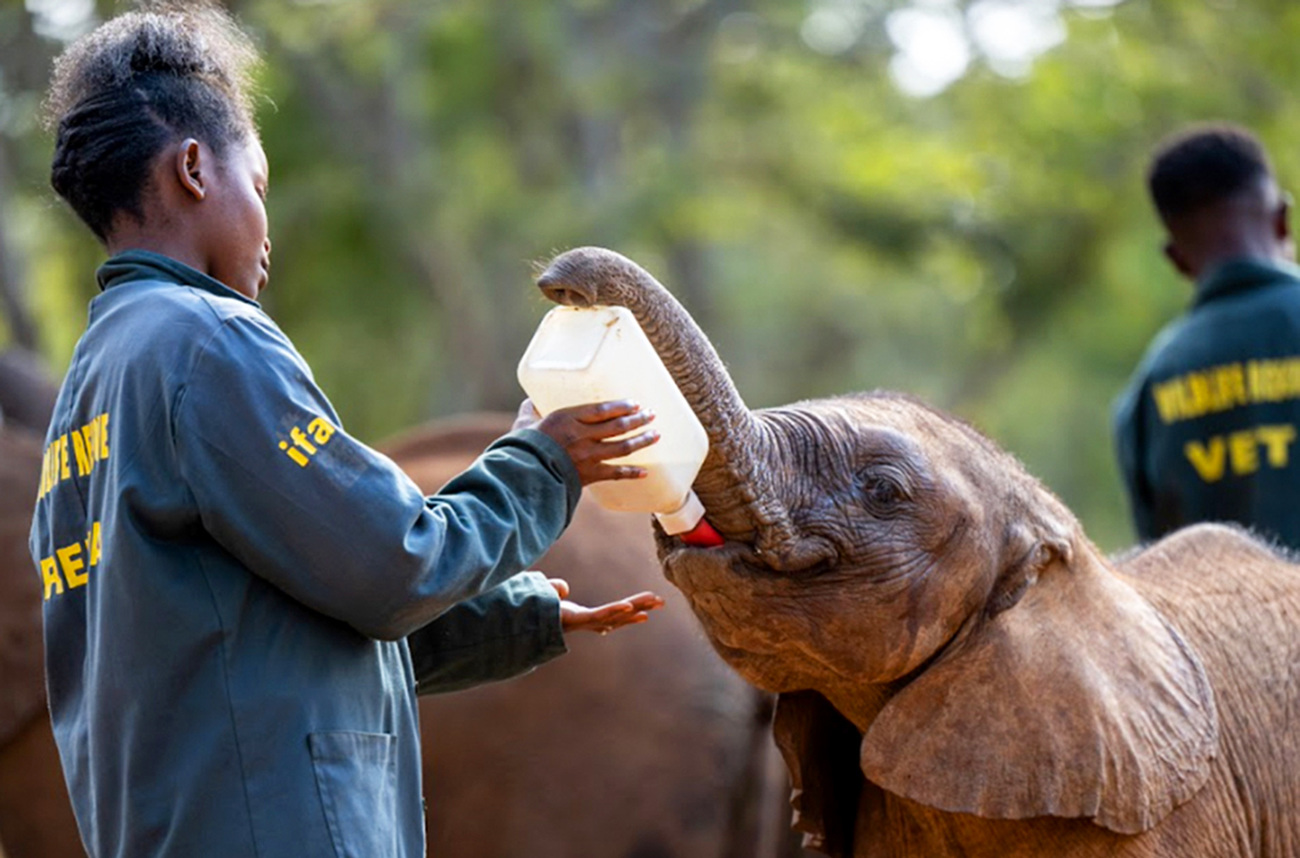
A handler bottle-feeds Wamwayi the elephant. Photo: © IFAW-GRI
Please donate to help us cover the gap. With your help, we can do it!
Your gift will help ensure that IFAW wildlife rangers can continue to protect elephants from poachers.
Monitoring the animals we release has given us new insights that can help inform future conservation efforts. For example, in IFAW’s work with partner organizations to rehabilitate and release orphaned elephant calves in Zambia, Zimbabwe, and India, we first organize the orphan elephants into artificial family groups. This is crucial from a welfare perspective, as elephants are a social species that rely on these family bonds for their well-being. After these elephants are rehabilitated and released back into the wild, they often gravitate toward wild elephant families, which afford them the protection and socialization they need.
Since we track all released elephants via satellite collars, this helps us not only assess whether the orphans require further support, but also see where wild elephants are going—knowledge that would be much more time-consuming and expensive to obtain if we had to dart and collar wild elephants. This knowledge is critically important for IFAW’s Room to Roam initiative, which aims to understand elephants’ movement patterns to better protect them and secure their habitats. Observing how elephants are moving within core landscapes and between protected areas not only opens up a whole new level of understanding of elephant behavior, but it can also play a massive role in improving conservation efforts by allowing us to focus money and energy on the areas where elephants need us most.
Satellite technology has also made it easier for us to keep tabs on the rehabilitated animals that we have released back into the wild—and confirm the success of these efforts. Take Jack, a young elephant who entered a rehabilitation facility in Zimbabwe in 2023. We don't know what happened to his mother and the family group, but he stayed at the facility for a couple of months until he was ready to re-enter the wild. Outfitted with a tracking collar, Jack has since traveled huge distances in an area covering more than 10,000 square kilometers (more than 4,000 square miles) in Botswana and Zimbabwe as the group he was with traversed the landscape throughout the seasons. That tells us that the rehabilitation process was successful and his ability to integrate back into a wild herd was effective. We’ve seen similar results with other species such as giant anteaters—despite the trauma that they’ve gone through, many of these animals have been able to return to the wild and live a natural life again.
IFAW’s global rescue impact
IFAW works with strategic partners all over the world to provide funding and technical support for wildlife rescues. From China to Lebanon to Mexico to Australia, you never know where the next crisis or disaster might require animals to be rescued.
As climate change has exacerbated drought in many places around the globe, fire has become a bigger threat to wildlife. When Australia was devastated by wildfires in 2019, we helped hundreds of koalas recover and return to the wild. More recently, as fires burned out of control in the Brazilian Pantanal, we have worked with local partner Tamanduá Institute to rehabilitate giant anteaters who were orphaned or injured by the blaze.
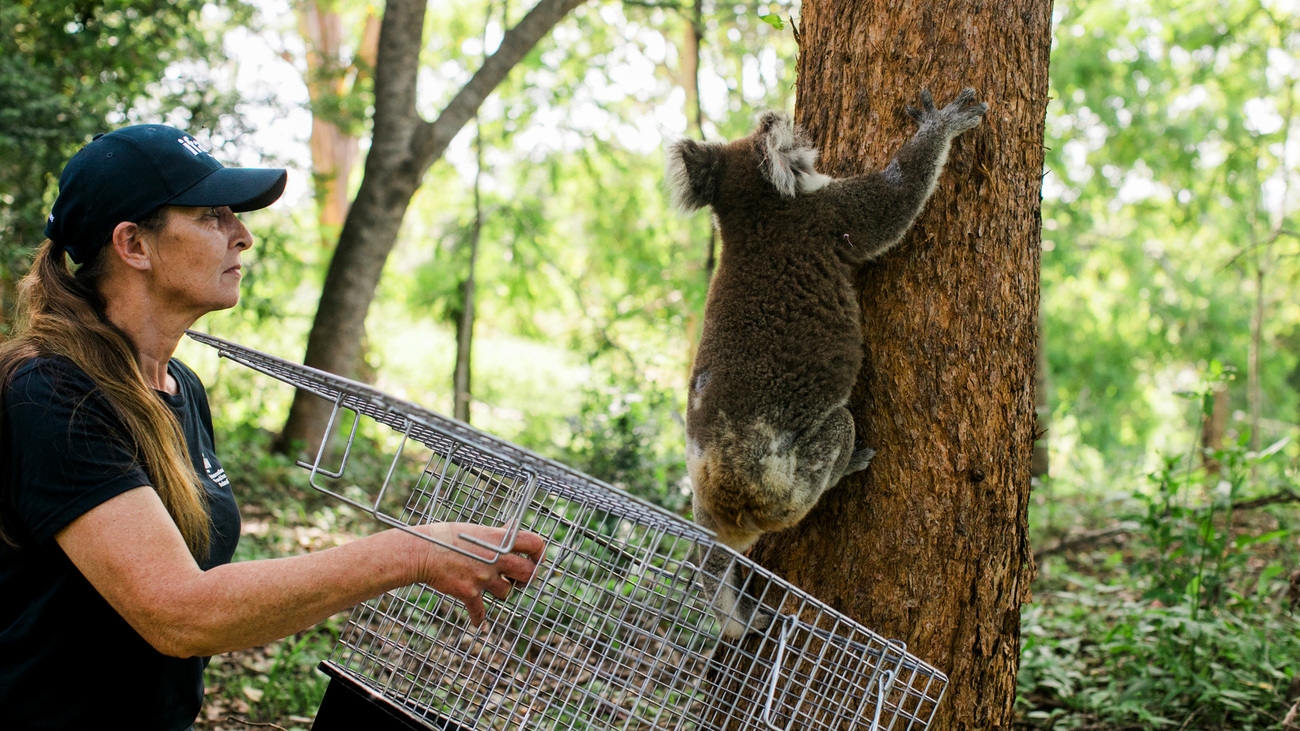
IFAW sponsored veterinary nurse, Marley Christian, watches Ginger, a rescued koala, climb out of the crate and onto a tree in a forest as she returns to the wild in East Lismore, New South Wales, Australia. Photo: Stacey Hedman / © IFAW
Through our CARE program (funded by the U.S. Bureau of International Narcotics and Law Enforcement Affairs), IFAW also works with law enforcement agencies and frontline customs offices in how to handle wildlife that is confiscated, ensure the welfare of those animals, and get them to a safe place where they can either be repatriated to their native country or, if they are native species, can get into a rehabilitation system and eventually be released back into the wild.
Of course, release back into the wild is not possible for all species or all individuals. For example, some animals face injuries serious enough that the most humane action is unfortunately euthanasia. In the case of lion, tiger, and leopard cubs, hand-rearing those animals and releasing them into the wild presents a myriad of challenges. So, these big cats often move into a sanctuary situation where they can be cared for humanely, because big cats that are hand-reared can pose major threats to communities.
Effective conservation requires a change in our mindset: from a model which focuses on populations to one that recognizes the value of each individual animal. Allowing a species to reach endangered or critically endangered status is unacceptable, and a sad indictment on the shortcomings of the old conservation model. By taking care of and addressing the needs of these individuals, we can secure their populations and give them the best chance of survival.
🚨 Almost there! We're so close to covering the funding we lost before December 31st.
If you can make even a small gift today it will go far.
Related content
every problem has a solution, every solution needs support.
The problems we face are urgent, complicated, and resistant to change. Real solutions demand creativity, hard work, and involvement from people like you.